

 









|
|
Advance Conference Program:

The World's Premier Conference for 3D Innovation
2- 4 March 2026
- Hyatt Regency San Francisco Airport Hotel, Burlingame, California, USA -
Held as part of:
The IS&T International Symposium on Electronic Imaging: Science and Technology
1 - 5 March 2026
To be published open-access as part of the IS&T Proceedings of Electronic Imaging.
| |
| 3D Theatre Sponsors: |
 |
|
 |
|
 |
| Conference Chairs: |
Nicolas S. Holliman, Independent Scientist (Australia)
Takashi Kawai, Waseda University (Japan)
Bjorn Sommer, Royal College of Art (United Kingdom)
Andrew J. Woods, Curtin University (Australia)
|
| Program Committee: |
Justus Ilgner, University Hospital Aachen (Germany)
Eric Kurland, 3-D SPACE (United States)
Eleanor O'Keefe, KBR (United States)
Nicholas Routhier, CubicSpace Technologies, Inc. (Canada)
John Stern, Intuitive Surgical, Retired (United States)
Laurie Wilcox, York University (Canada)
|
Human Vision and Electronic Imaging
Augmented and Mixed Reality I
Location: Grand Peninsula A
Joint Session with Stereoscopic Displays and Applications and Engineering Reality of Virtual Reality
|
Mon. 8:30 AM - 10:30 AM |
8:30 AM : HVEI Keynote: How human vision science shapes future displays, Qi Sun | NYU
[HVEI-207]
9:20 AM : Enhancing digital rear-view mirrors in trucks using overlayed graphics, Kjell Brunnström | RISE Research Insitute of Sweden
[HVEI-208]
9:40 AM : The impact of foveated rendering on motion parallax: A perceptual model of depth sensitivity across the visual field, Sophie Kergaβner | Università della Svizzera italiana
[HVEI-209]
| Coffee Break |
Mon. 10:30 AM - 11:00 AM |
Highlight Session Human Vision and Electronic Imaging
Location: Grand Peninsula D
|
Mon. 11:00 AM - 12:30 PM |
Join us for a session that highlights the breadth of the EI Symposium with short papers selected by their Chairs from EI conferences.
The full papers are given at other times in the program.
|
| Lunch Break (Electronic Imaging Welcome Lunch) |
Mon. 12:20 PM - 2:00 PM |
Electronic Imaging Welcome Lunch (lunch provided)
Location: The Grove
|
Mon. 12:20 PM - 2:00 PM |
The Electronic Imaging Symposium All-Conference Welcome Lunch provides a wonderful opportunity to get to know and interact with new and old EI and SD&A colleagues.
Plan to join us for this relaxing and enjoyable event.
|
EI Plenary 1
Location: Grand Peninsula D
|
Mon. 2:00 PM - 3:00 PM
|
|
 PLENARY: Trust and Truth in the Age of Deepfakes
Hany Farid, Professor, University of California, Berkeley
Abstract: Synthetic media - so-called deep fakes - have captured the imagination of some and struck fear in others. Although they vary in their form and creation, deepfakes refer to text, image, audio, or video that has been automatically synthesized by a AI models. Deepfakes are the latest in a long line of techniques used to manipulate reality, steal identities, spread disinformation, and perpetrate small- to large-scale fraud. Yet, their introduction poses new risks due to the democratized access to what would have historically been the purview of Hollywood-style studios. I will describe how deepfakes are created, how they are being used and misused, if (and how) they can be perceptually and forensically distinguished from reality, and how they are being (and should be) regulated.
Biography: Hany Farid is a professor at the University of California, Berkeley with appointments in the School of Information and Electrical Engineering & Computer Sciences. He is also also the co-founder and chief science officer at GetReal Security. His research focuses on digital forensics, forensic science, misinformation, image analysis, and human perception. He received his undergraduate degree in computer science and applied mathematics from the University of Rochester in 1989, his M.S. in computer science from SUNY Albany in 1992, and his Ph.D. in computer science from the University of Pennsylvania in 1997. Following a two-year post-doctoral fellowship in Brain and Cognitive Sciences at MIT, he joined the faculty at Dartmouth College in 1999 where he remained until 2019. He is the recipient of an Alfred P. Sloan Fellowship and a John Simon Guggenheim Fellowship. He is also a Fellow of the National Academy of Inventors.
|
|
|
| Coffee Break |
Mon. 3:00 PM - 3:30 PM |
Stereoscopic Displays and Applications session 1
Displays
Location: Grand Peninsula D
Session Chair: Takashi Kawai, Waseda University and Bjorn Sommer, Royal College of Art
Joint Session with Stereoscopic Displays and Applications and Engineering Reality of Virtual Reality
|
Mon. 3:30 PM - 5:30 PM |
3:30 PM : SD&A Conference Welcome, Takashi Kawai | Waseda University
3:40 PM : Hybrid scan multiviewer true perspective autostereo display, Steen Svendstorp Iversen | Realfiction ApS
[SDA-332]
4:00 PM : Implementation of pseudo-convergence angle in eye tracking for CG-based lenticular naked-eye 3D displays, Yoshihiro Sato | Tokyo City University
[SDA-333]
4:20 PM : SD&A Keynote Presentation
|
SD&A Keynote
|
Mon. 4:20 PM - 5:20 PM
|
|
 KEYNOTE: Embodying the Machine: Strategies and Frameworks for Ethical XR
Michelle Cortese, Design Director, Input & Interaction @ Meta (Reality Labs); Adjunct Professor, XR Design @ NYU (Interactive Telecommunications Program)
Abstract: This presentation compiles a decade's worth of strategies and subject-matter that have proven successful in teaching augmented, virtual and extended reality (AR, VR, XR) concepts and practices. The methodologies in this talk have been successfully applied: in academia at NYU's Interactive Telecommunications program (in the form of a 14-week graduate class); in the tech industry at Meta Reality Labs' Metaverse department (in the form of an internal upskilling program); in summary form at various conferences; and in as an upcoming book (to be published via Intellect Books in 2027). The material argues that to build and use XR experiences, it's not enough to learn the hard skills - it's also our responsibility to prime ourselves for the human impact of the medium. As a means to develop XR experiences that are both enjoyable and accountable, this learning approach proposes we borrow structures and principles from Hedonomics, a branch of ergonomic science that facilitates pleasurable human-technology interaction. Through the Hedonomic Pyramid, we're able to section our thinking off into regions (Safety, Function, Usability, Pleasure and Individuation) and map out industry-tested XR concepts for each. The result is a hierarchical checklist of proven principles, specifications and practices built to serve as a quickstart guide for implementing inclusive and holistic XR interfaces and systems.
Biography: Michelle Cortese is an XR designer, educator and author. She splits her professional time between design leadership at Meta Reality Labs and teaching VR design at NYU. Her work explores immersive interaction systems; the ethical implications of embodied technology on end users; and the transmutation of human expression across new technologies and formats. Michelle has authored AR and VR design research published via Bloomsbury, Meta, IEEE, OneZero, MIT's Immerse Journal and more; she has also exhibited work at CES, Tribeca Film Festival, SXSW, and Sundance.
|
|
|
| Session Break |
Mon. 5:20 PM - 5:30 PM |
SD&A 3D Theatre
Producers: John Stern, retired (United States); Eric Kurland, 3-D SPACE Museum (United States); Andrew Woods, Curtin University (Australia). |
Mon. 5:30 PM - 7:00 PM |
This ever-popular session of each year's Stereoscopic Displays and Applications Conference showcases the wide variety of 3D content that is being produced and exhibited around the world. All 3D footage screened in the 3D Theater Session is shown in high-quality polarized 3D on a large screen. This year we will include some 3D gaming content for the first time as well as some new VR180 productions. The final program will be announced at the conference and 3D glasses will be provided.
|
| SD&A Conference Annual Dinner |
Mon. 7:15 PM to late |
The annual informal dinner for SD&A attendees. An opportunity to meet with colleagues and discuss the latest advances. There is no host for the dinner. Information on venue and cost will be provided on the day at the conference.
|
Stereoscopic Displays and Applications session 2
Human Factors
Location: Grand Peninsula D
Session Chair: Andrew Woods, Curtin University
Joint Session with Stereoscopic Displays and Applications and Engineering Reality of Virtual Reality
|
Tue. 8:30 AM - 10:30 AM |
8:30 AM : Oculomotor behavior in response to vergence-accommodation conflict, Eric Seemiller | KBR, Inc.
[SDA-334]
8:50 AM : The effects of vertical misalignment in a stereoscopic display during a long-haul aerial refueling simulation, Eleanor O'Keefe | KBR
[SDA-335]
9:10 AM : Virtual reality and anhedonia: Exploring reward processing and emotional numbing, Dan Benedict
[SDA-336]
9:30 AM : Basic characteristics of body-visual interaction in mixed reality environments, Yusuke Ohira
[SDA-337]
9:50 AM : Case Study - two VR180 3D student internships - Immersive Nature and Moot Court, Haotian Luo, Zo Carlsson, Rachel Sheffield, Michael Dizon, Craig Sims, Michael Ovens, Andrew Woods | Curtin University
10:10 AM : Albany Then & Now: matching stereo-views from 1858 with the modern day, Andrew Woods, Tomas Szabo | Curtin University
| Coffee Break |
Tue. 10:30 AM - 11:00 AM |
Stereoscopic Displays and Applications session 3
Capture and Playback
Location: Grand Peninsula D
Session Chair: Takashi Kawai, Waseda University
Joint Session with Stereoscopic Displays and Applications and Engineering Reality of Virtual Reality
|
Tue. 11:00 AM - 11:40 AM |
11:00 AM : Adaptive video playback: Extending the CubicSpace model to video, Nicholas Routhier | Cubic Space
[SDA-338]
11:20 AM : Aerial-imaging light-field camera with wide-viewing angle for real-time 3D imaging, Kotaro Sakamoto | Osaka Institute of Technology
[SDA-339]
Stereoscopic Displays and Applications session 4
AI & XR for Education
Location: Grand Peninsula D
Session Chair: Bjorn Sommer, Royal College of Art
Joint Session with Engineering Reality of Virtual Reality
|
Tue. 11:40 AM - 12:40 PM |
11:40 AM : Virtual reality in engineering education: A survey of applications, trends, and challenges, Sergiu Dascalu | University of Nevada, Reno
[SDA-340]
12:00 PM : MAIVE: A multi-agent AI-driven immersive virtual reality environment for astronomy education, Francia Fuentes Riesco | Colorado State University
[SDA-341]
12:20 PM : A comparative study on memory strategy adaptation in XR vocabulary learning, Nicko Caluya | Ritsumeikan University
[SDA-342]
| Lunch (On Own) |
Tue. 12:20 PM - 2:00 PM |
EI Plenary 2
Location: Grand Peninsula D
|
Tue. 2:00 PM - 3:00 PM
|
|
 PLENARY: The Drunk at the MicroLED Lamppost
Nikhil Balram, CEO, Mojo Vision
Abstract: Light-emitting diodes (LEDs) are well established as high brightness, high efficiency light sources. MicroLEDs extend these advantages through extreme miniaturization, enabling entirely new classes of applications - from massively parallel optical interconnects for AI infrastructure to ultra-compact displays for AI glasses. However, realizing this potential requires far more than tiny LEDs. It demands an integrated platform spanning CMOS backplanes, GaN devices, quantum-dot materials, advanced optics, chemistry, software, and system design tools. This talk explores the technical architecture behind Mojo's microLED platform, the system-level challenges of scaling it, and why it always makes sense to look for your solutions at the microLED lamppost.
Biography: Nikhil Balram has over 30 years of experience across a broad set of industries including semiconductor, display, consumer electronics, healthcare, defense, and enterprise. He is currently CEO of Mojo Vision, a Silicon Valley start-up pioneering a highly flexible, vertically integrated microLED platform that enables breakthrough products such as AI glasses and next-generation optical interconnects for AI data centers. Past executive roles include head of the display group at Google, where he was responsible for developing display systems for all Google consumer hardware; CEO of Ricoh Innovations Corporation; VP/GM of Digital Entertainment BU at Marvell Semiconductor; and CTO of the display group at National Semiconductor. Products and technologies developed by teams he led won over a dozen major awards including a Technical Emmy. He has received numerous awards including the Otto Schade Prize, the Gold Stevie® Award for Executive of the Year in the Electronics category, and an Alumni Achievement Award from Carnegie Mellon University (CMU). He has more than 130 US and international patents granted or pending and over 75 technical publications, including three invited book chapters. Balram is a Fellow of SID and was general chair for Display Week 2021 and program chair for Display Week 2019. He has been a visiting professor of vision science at University of California, Berkeley, and is currently a guest professor of design & innovation at the Indian Institute of Technology (IIT Gandhinagar) and an adjunct professor of electrical engineering at CMU. He received his BS, MS, and PhD in electrical engineering from CMU.
|
|
|
| Coffee Break |
Tue. 3:00 PM - 3:30 PM |
Stereoscopic Displays and Applications session 5
Marine Applications
Location: Grand Peninsula D
Session Chair: Nicholas Routhier, CubicSpace Technologies, Inc.
Joint Session with Engineering Reality of Virtual Reality
|
Tue. 3:30 PM - 4:10 PM |
3:30 PM : Trans-oceanic stereoscopic experimentation: Co-visualizing quantitative & qualitative ocean data to reveal climate change tipping points on & above the ocean, Bjorn Sommer | Royal College of Art
[SDA-343]
3:50 PM : Virtual reality for environmental sustainability: Case cruise entertainment, Eero Nirhamo | University of Turku
[SDA-344]
Stereoscopic Displays and Applications session 6
Business Innovation
Location: Grand Peninsula D
Session Chair: Eleanor O'Keefe, KBR
Joint Session with Engineering Reality of Virtual Reality
|
Tue. 4:10 PM - 4:50 PM |
4:10 PM : The road to CubicScreen, Nicholas Routhier | Cubic Space
[SDA-345]
4:30 PM : Future virtual conferencing: From web-based technologies to extended reality, Bjorn Sommer | Royal College of Art
[SDA-346]
| Session Break |
Tue. 4:50 PM - 5:30 PM |
Electronic Imaging Symposium Demonstration Session and Exhibits Happy Hour
Location: Grand Peninsula Foyer
|
Tue. 5:30 PM - 7:00 PM |
|
|
Demonstrations
This symposium-wide, hands-on, interactive session, provides a perfect opportunity to witness electronic imaging in action first hand. Attendees can see the latest research, compare commercial products, ask questions of knowledgeable demonstrators, and even make purchasing decisions about a range of electronic imaging products. The demonstration session hosts a vast collection of technologies and products, and is also a valuable networking opportunity.
The session will include demonstrations from presenters from the Stereoscopic Displays and Applications conference and you will see a range of stereoscopic products with your own two eyes.
More information about previous year demonstrations: http://www.stereoscopic.org/demo/index.html. |
Engineering Reality of Virtual Reality session 1
VR Frameworks and Tools
Location: Grand Peninsula D
Session Chair: Sharad Sharma | University of North Texas
Joint Session with Stereoscopic Displays and Applications
|
Wed. 8:30 AM - 10:30 AM |
8:30 AM : ERVR Welcome
8:40 AM : Scientific Java 3D applications in VR headsets: A case study using CELLmicrocosmos software, Bjorn Sommer | Royal College of Art
[ERVR-184]
9:00 AM : Bridging unity VR experiment templates and institutional infrastructure, Sergiu Dascalu | University of Nevada, Reno
[ERVR-185]
9:20 AM : ERVR Keynote Presentation
|
ERVR Keynote Presentation
|
Wed. 9:20 AM - 10:20 AM
|
|
 KEYNOTE: The Eureka VR Environment for Mining Engineering Education
Dr. Sergiu Dascalu, University of Nevada
Abstract: In this talk, the Eureka VR environment for mining engineering education, developed as part of an NSF-funded project, will be presented. The talk will include a brief overview of this NSF RETTL (Research on Emerging Technologies for Teaching and Learning) project, a review of related VR-based approaches in engineering education, and a description of the Eureka environment's software architecture and implementation solution. The specific learning objectives of Eureka's four study modules will also be described, and examples of using the environment for studying froth flotation in mining education will be provided.
Biography: Dr. Sergiu Dascalu is a professor in the Department of Computer Science and Engineering (CSE) at the University of Nevada, Reno (UNR). He received a PhD degree in computer science (with a focus on software engineering) from Dalhousie University, Canada, and a Master's degree in automatic control and computers from the Polytechnic University of Bucharest, Romania. His main interests are in human-computer interaction, data science, and software engineering. Co-director of the Software Systems Lab at UNR, Dr. Dascalu has worked on numerous research projects funded by federal agencies (NSF, NASA, DoD-ONR) as well as the industry. He published over 60 journal articles and over 240 peer-reviewed conference papers and has advised 13 PhD and 65 MS in CSE students who graduated. Dr. Dascalu contributed in various roles to the organization of more than 150 conferences, symposia, and workshops. He is a senior member of the ACM.
|
|
|
| Coffee Break |
Wed. 10:30 AM - 11:00 AM |
Engineering Reality of Virtual Reality session 2
AI & XR for Health Applications
Location: Grand Peninsula D
Session Chair: Bjorn Sommer | Royal College of Art
Joint Session with Stereoscopic Displays and Applications
|
Wed. 11:00 AM - 12:20 PM |
11:00 AM : "Say bye for hi": XR mourning ritual with AI-powered avatar in the aftermath of a national tragedy, Hae Jung Suk | VHEX Lab. Co., Ltd.
[ERVR-187]
11:20 AM : Virtual reality-based AI mental health companion: A multimodal system for therapy, mindfulness, and stress detection, Sharad Sharma | University of North Texas
[ERVR-188]
11:40 AM : Virtual reality 3D puzzles for sustaining cognitive and motor skills in seniors, Regina Kaplan-Rakowski | University of North Texas
[ERVR-189]
12:00 PM : Simulating epidemic response and communication using AI-powered NPCs in virtual reality, Faria Alam | University of North Texas
[ERVR-190]
| Lunch Break (Lunch provided during the EI Poster Session) |
Wed. 12:20 PM - 2:00 PM |
Poster Session (Lunch Hosted by EI)
Location: The Grove
|
Wed. 12:20 PM - 2:00 PM
|
|
Abstract: Conference attendees are encouraged to attend the Symposium-wide Poster Session where authors display their posters and are available to answer questions and engage in in-depth discussions about their work.
|
|
|
12:20 PM : Poster: Automation of a stereotaxic device through integrated software, motion control, and housing design, Johnssi Manjunath | Consultant
[SDA-347]
12:20 PM : Posters from other EI conferences
EI Plenary 3
Location: Grand Peninsula D
|
Wed. 2:00 PM - 3:00 PM
|
|
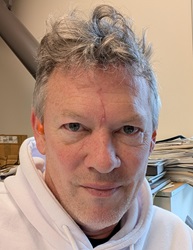 PLENARY: Vera C. Rubin Observatory and the Legacy Survey in Space and Time
Andrew Peter Rasmussen, SLAC National Accelerator Laboratory, Stanford University
Abstract: The Legacy Survey in Space and Time will commence in the very near future. The Survey will be acquired by the dedicated Vera C. Rubin Observatory located on a mountaintop in Chile and will record 1/3 of the southern sky every night for 10 years. Images are acquired in 6 bands spanning near UV through the near infrared, with atmosphere-limited image quality through active optic compensation. High-cadence, repeated measurements in precise spectral bands open up a vast discovery volume of the transient sky (and time-critical transient alerts) while allowing strong reduction of faint sensitivity limits for the background sources populating the quiescent sky. I will describe design and operational features of Rubin and of the Camera, the path toward its completion and how we will cope with 20 TB of original image data (per night).
Biography: Andrew Rasmussen (he/him/his) is a staff physicist and experimental astronomer at SLAC National Accelerator Laboratory, having served in Camera Scientist and Camera Integration & Testing Scientist roles, over the years, for Rubin Observatory's Camera. Prior to this, at Columbia University's Astrophysics Lab he worked to design, build and deploy the X-ray grating array modules for the Reflection Grating Spectrometer aboard the European Space Agency's XMM/Newton Observatory. At MIT he developed characterization methods for using CCDs as broad-band imaging spectrometers used aboard NASA's Chandra X-Ray Observatory and ISAS's ASCA. For his PhD thesis he cut his teeth on a sounding rocket-borne, far-ultraviolet long-slit spectrometer to unambiguously identify and measure highly ionized interstellar medium pervading the Milky Way.
|
|
|
| Coffee Break |
Wed. 3:00 PM - 3:30 PM |
Engineering Reality of Virtual Reality session 3
Audio & Visuals in VR
Location: Grand Peninsula D
Session Chair: Bjorn Sommer | Royal College of Art
Joint Session with Stereoscopic Displays and Applications
|
Wed. 3:30 PM - 5:30 PM |
3:30 PM : Vision-only keystroke tracking: Realtime keyboard segmentation, occluded key recovery, and keypress detection for surface typing, Lawrence Amadi | Futurewei Technologies
[ERVR-191]
3:50 PM : Actions can teach better than words, Sergiu Dascalu | University of Nevada, Reno
[ERVR-192]
4:10 PM : Use of psychoacoustics for improved interaction and navigation capabilities in extended reality, Rhoda Asamoah | Iowa State University
[ERVR-193]
4:30 PM : Sublime VR: The influence of auditory presentation, Yoshihiro Banchi | Waseda University
[ERVR-194]
Other Electronic Imaging conferences.
|
See other Electronic Imaging Symposium events at: www.ElectronicImaging.org |

